Healthy Aging
Strength Training After 40: Benefits and a Safe Way to Start
Resistance training can improve strength and support bone and muscle health. Start with a manageable programme, good technique, and modifications that fit your health.
Health information notice: This article is for general education, not diagnosis or a treatment plan. Discuss symptoms, medicines, supplements, fasting, or major diet and exercise changes with a qualified clinician. Read our medical disclaimer.
Strength training is useful across adulthood. It can improve strength and physical function, and it may support bone density and body composition. It is not an anti-aging cure, and the right programme depends on experience, injuries, symptoms, and health conditions.
What the evidence supports
The U.S. Physical Activity Guidelines recommend muscle-strengthening activity involving major muscle groups on at least two days each week. A meta-analysis in postmenopausal women found resistance training can improve bone-density outcomes, while a 12-week randomised trial reported better strength and some body-composition measures.
A beginner framework
- Learn a squat or sit-to-stand, hinge, push, pull, carry, and core-bracing pattern.
- Begin with a load you can control through a comfortable range.
- Train two non-consecutive days per week and add load or repetitions gradually.
- Stop for sharp pain, chest pain, severe breathlessness, dizziness, or new neurological symptoms.
- Prioritise technique and recovery over exhausting sessions.
When to get help
A qualified trainer can help with technique. Ask a clinician or physiotherapist for individual guidance if you have osteoporosis, recent surgery, significant joint pain, pelvic-floor symptoms, uncontrolled blood pressure, heart disease, or another condition that changes exercise safety.
What strength training means
Strength training asks muscles to work against resistance, including body weight, bands, machines, dumbbells, or other controlled loads. The Physical Activity Guidelines recommend muscle-strengthening activity for major muscle groups on at least two days each week. A meta-analysis in postmenopausal women reported bone-density improvements, while a 12-week trial found strength and some body-composition improvements. Neither result guarantees the same outcome for every person.
| Decision point | Why it matters | Next step |
|---|---|---|
| You cannot control the movement | Control is more useful than a heavy load. | Use a supported or lighter version. |
| You are returning after a break | Capacity builds with repetition. | Start with two non-consecutive days. |
| You have bone, heart, or joint concerns | You may need modifications. | Seek individualized guidance. |
| Pain is sharp or worsening | Pain differs from ordinary effort. | Stop and assess it. |
Start with the space you have
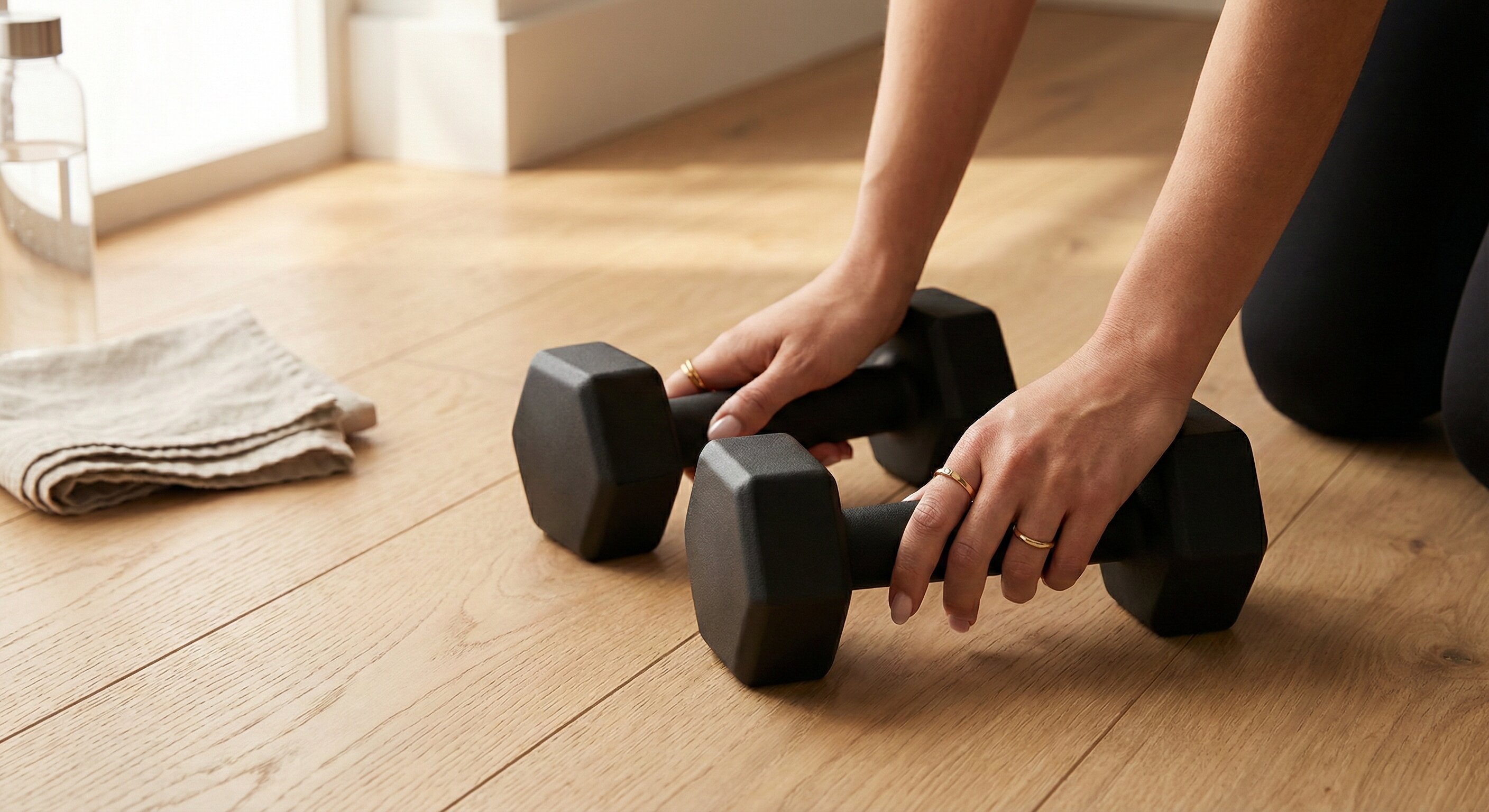
Plan a simple strength corner at home
Choose one useful piece of gear, check your space, and make your first session feel manageable.
The secure signup form will load here.
By subscribing, you agree to receive the requested HealthyFitLine resource and optional email updates through SendFox. You can unsubscribe at any time. See our privacy policy.
We could not load the form here. Open the secure signup form.
Build capacity without chasing exhaustion
Most balanced plans include a squat or sit-to-stand, hinge, push, pull, carry, and trunk-stability movement. Start with a range of motion and resistance you can control. Breathe continuously and leave a few repetitions in reserve. Add a small amount of weight, repetitions, or another set after the current workload feels steady for several sessions.
Soreness can happen when you begin. Sharp pain, chest pain, fainting, severe breathlessness, new weakness, or neurological symptoms are reasons to stop and seek care. Strength Training for Women Over 40 offers a first-month framework; this page focuses on evidence, benefits, and safety questions.
Reader questions
How often should I train after 40?
Work toward muscle-strengthening activity on at least two days a week, starting with less if needed.
Is bodyweight training enough?
It can be a useful starting point. Progress comes from making movements gradually more challenging while maintaining control.
Should I lift through sharp pain?
No. Stop for sharp or worsening pain and get individualized advice when needed.
Choose progress you can observe
Use markers that match the purpose of training: rising more easily from a chair, carrying groceries with more control, steadier balance, or using a slightly heavier resistance with good form. These changes can matter even when body weight does not move. Keep a simple note of exercises, resistance, sets, and how the session felt. It gives you a safer basis for progression than copying another person's routine or chasing a sore feeling.
When in doubt, repeat a session rather than escalating it. The ability to train again next week is more valuable than one exhausting workout.
Choose footwear and a surface that let you feel stable, and ask for a technique check if you are unsure about a new movement. Safe progression is usually quiet and gradual, not dramatic. That approach also makes it easier to recover and continue training.
Sources and further reading
These links explain the evidence and guidance used for this article. Commercial product pages are excluded from this list.
- Physical Activity Guidelines for Americans, 2nd edition
U.S. Department of Health and Human Services. Adults should include muscle-strengthening activity involving major muscle groups on at least two days each week.
- Resistance training and bone mineral density in postmenopausal women
Systematic review and meta-analysis (PubMed). The pooled trials reported improved lumbar-spine, femoral-neck, and total-hip bone-mineral-density outcomes, with study limitations.
- Resistance training and high-protein diet in postmenopausal women
Randomized controlled trial (PubMed). A 12-week resistance program improved strength and some body-composition measures.