Hormones & Menopause
Menopause Diet: What to Eat, Limit, and Discuss With a Clinician
A Mediterranean-style pattern can provide protein, fibre, calcium, and unsaturated fats during midlife. Diet may support health and symptoms, but it is not a guaranteed menopause treatment.
Health information notice: This article is for general education, not diagnosis or a treatment plan. Discuss symptoms, medicines, supplements, fasting, or major diet and exercise changes with a qualified clinician. Read our medical disclaimer.
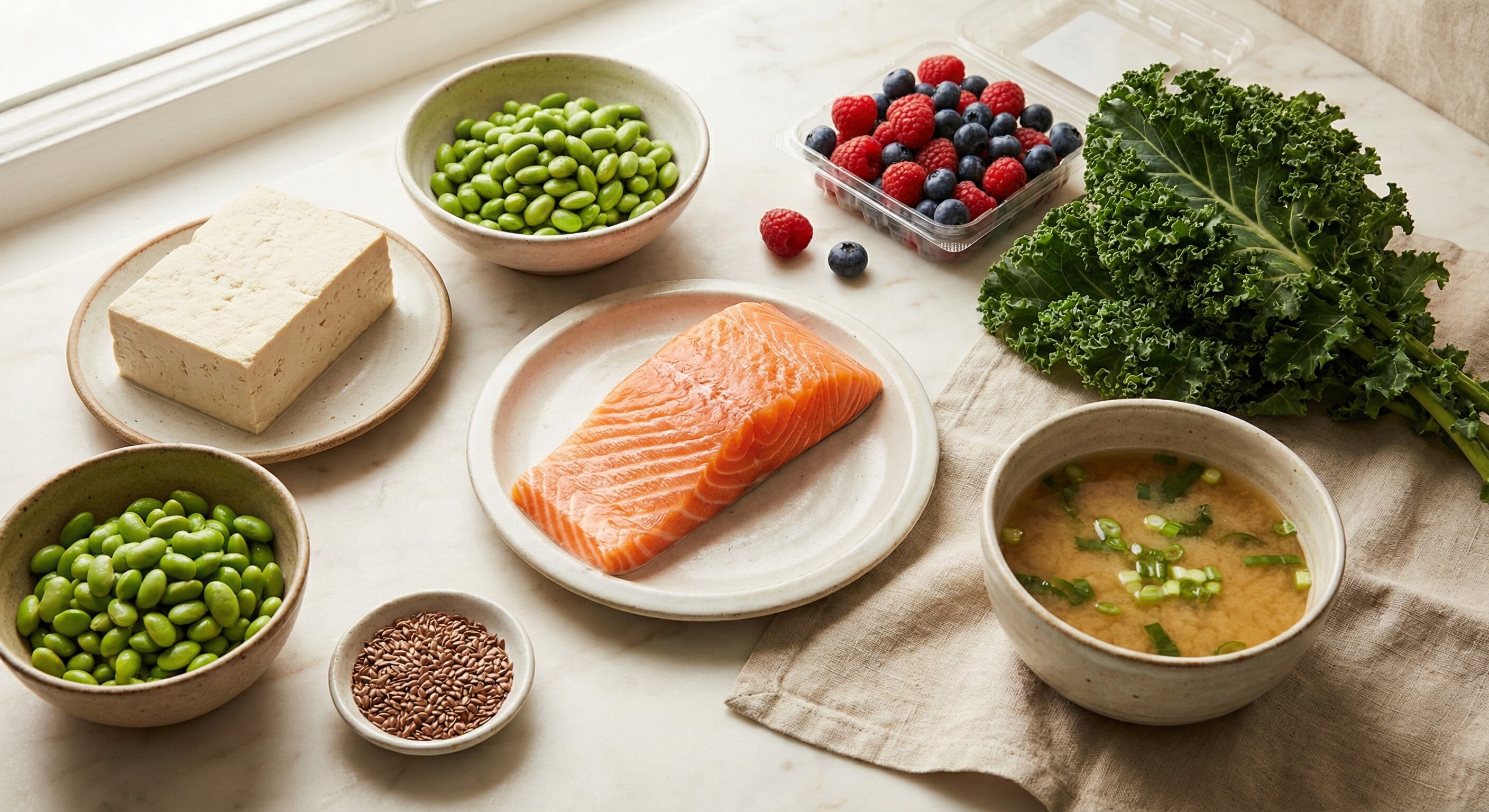
There is no single menopause diet and no food that reliably “balances” hormones. A useful pattern is one you can afford, enjoy, and sustain: vegetables and fruit, beans and lentils, whole grains, protein foods, nuts and seeds, and mostly unsaturated fats. The NIA food-group guide and the current Dietary Guidelines for Americans provide a better foundation than a rigid seven-day cleanse.
Build balanced meals
At breakfast, try oats with yogurt and fruit or eggs with whole-grain toast. Lunch could combine beans, tofu, fish, chicken, or eggs with vegetables and a grain. For dinner, use a protein food, several vegetables, and potatoes, rice, or another carbohydrate you enjoy. Calcium-rich foods may include dairy or fortified alternatives, tofu made with calcium, and some fish; vitamin D needs depend on sunlight, diet, location, and risk. The NIAMS calcium and vitamin D guide explains why supplement doses should not be guessed.
Limit foods that worsen your own symptoms, often alcohol, very large meals, or caffeine late in the day, but do not label all sugar, soy, gluten, or seed oils universally harmful. If hot flashes, reflux, migraine, or sleep changes have a clear trigger, a short food-and-symptom record can help. Elimination diets and supplement stacks can create nutritional gaps and may interact with medicines.
Get individual advice when needed
Diet alone is not a guaranteed treatment for hot flashes, mood changes, bone loss, diabetes, or weight change. The ACOG menopause guidance outlines lifestyle and medical options. Ask a clinician or dietitian for help if you have kidney disease, diabetes, osteoporosis, coeliac disease, food insecurity, a history of an eating disorder, or unexplained weight change. Seek care for persistent vomiting, swallowing difficulty, bleeding, severe abdominal pain, or symptoms that suddenly change.
Aim for nourishment, strength, sleep, and appropriate screening, not a perfect food list or a promised percentage improvement.
What a menopause diet can do
There is no single diet that balances hormones or reliably treats every menopause symptom. A varied food pattern can support overall health, strength, and adequate nutrients. The NIA food-group guide and Dietary Guidelines for Americans provide a more stable foundation than a cleanse or elimination list.
| Meal part | Examples | Purpose |
|---|---|---|
| Protein food | Beans, lentils, tofu, fish, eggs, dairy, poultry, or meat. | Supports a varied, satisfying meal. |
| Plant food | Vegetables, fruit, beans, and whole grains. | Adds fibre and nutrients. |
| Calcium source | Dairy, fortified alternatives, calcium-set tofu, or some fish. | Supports adequate intake. |
| Fats | Nuts, seeds, olive oil, and other unsaturated fats. | Adds energy and flavor. |
Use foods you enjoy and can afford. Alcohol, very large meals, or late caffeine can be noticeable triggers for some people, but no food is universally forbidden. A brief food-and-symptom record can help identify a pattern without labeling sugar, soy, gluten, or seed oils as universally harmful.
The NIAMS explains why supplement doses should not be guessed. Diet is not guaranteed treatment for hot flashes, mood changes, bone loss, diabetes, or weight change. ACOG outlines lifestyle and medical options to discuss when symptoms need care.
Make the routine practical
Plan movement that matches your meals
Use the workbook to create a simple home routine without adding unnecessary equipment.
The secure signup form will load here.
By subscribing, you agree to receive the requested HealthyFitLine resource and optional email updates through SendFox. You can unsubscribe at any time. See our privacy policy.
We could not load the form here. Open the secure signup form.
Reader questions
Is soy forbidden during menopause?
No. This guide does not support universally excluding soy. Individual needs and medical advice still matter.
Should I take calcium and vitamin D supplements?
Needs depend on diet, sunlight, location, and health risks. Do not guess doses; discuss them with a clinician or pharmacist when needed.
Which foods should I avoid for hot flashes?
Triggers vary. Track patterns briefly and avoid only foods that clearly worsen your own symptoms. See High-Protein Eating After 40 for flexible protein-food ideas.
Keep changes realistic
Try one change at a time, such as adding a calcium-rich food, planning a protein option for lunch, or moving caffeine earlier. A diet that becomes costly, isolating, or too restrictive is unlikely to last.
If a food clearly worsens reflux, migraine, hot flashes, or sleep for you, adjust it without assuming everyone needs the same restriction. Keep enough variety that the plan remains nourishing and socially workable.
Sources and further reading
These links explain the evidence and guidance used for this article. Commercial product pages are excluded from this list.
- Healthy Eating As You Age: Know Your Food Groups
National Institute on Aging. A varied pattern of vegetables, fruit, whole grains, protein foods, and healthy fats can meet nutritional needs without relying on a single superfood.
- Dietary Guidelines for Americans, 2025–2030
U.S. Department of Agriculture and Department of Health and Human Services. The current federal guidance prioritises whole, nutrient-dense foods and reducing highly processed foods, refined carbohydrates, added sugars, and excess sodium.
- The Menopause Years
American College of Obstetricians and Gynecologists. Menopause care includes lifestyle measures and evidence-based options for symptoms; diet alone is not a guaranteed treatment for hot flashes or other symptoms.
- Calcium and Vitamin D: Important at Every Age
National Institute of Arthritis and Musculoskeletal and Skin Diseases. Calcium and vitamin D support bone health, but supplement doses should be based on dietary intake, risk factors, and professional advice.