Hormones & Menopause
Menopause Anxiety: When to Take It Seriously and What Can Help
Anxiety can worsen during the menopause transition, but hormones are only one piece of the picture. Learn practical next steps and when to seek urgent support.
Health information notice: This article is for general education, not diagnosis or a treatment plan. Discuss symptoms, medicines, supplements, fasting, or major diet and exercise changes with a qualified clinician. Read our medical disclaimer.
Quick answer: Anxiety can feel new or more intense during the menopause transition, but hormones are only one possible contributor. Track the pattern, discuss persistent symptoms with a qualified clinician, and seek urgent help for immediate safety concerns, chest pain, or severe shortness of breath.
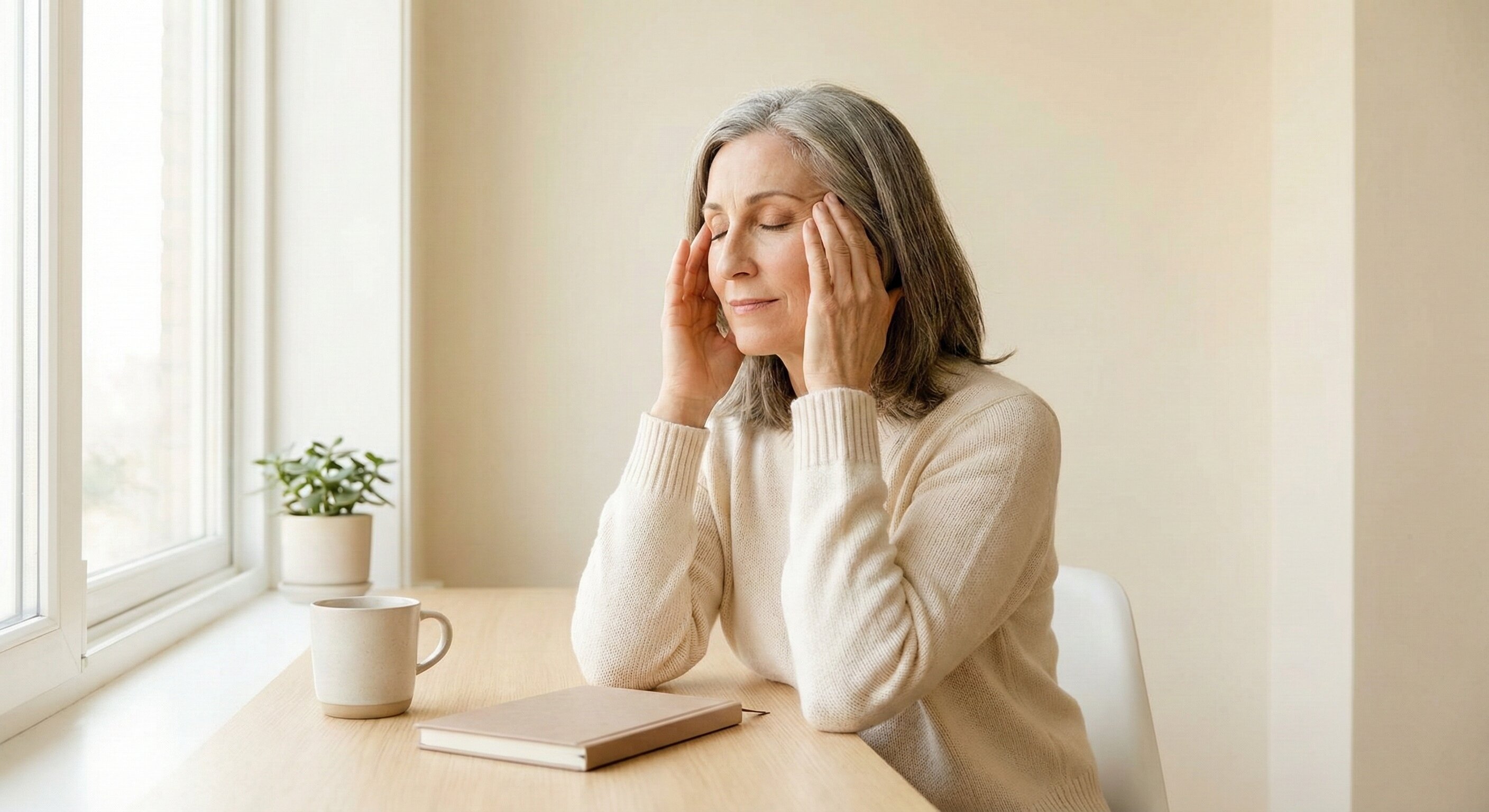
Menopause anxiety describes anxiety symptoms that occur during the menopause transition. It is not a diagnosis that proves hormones are the only cause. Racing thoughts, dread, irritability, a pounding heart, and poor sleep can overlap with menopause symptoms and with other health conditions.
What the evidence supports
The long-running SWAN study found that women without high anxiety at the start were more likely to report high-anxiety symptoms during or after the transition than before it. This is an association, not proof that fluctuating hormones directly cause an anxiety disorder. Prior anxiety, hot flashes, sleep disruption, life changes, and health problems can all be part of the picture.
That nuance is useful. You do not need to dismiss a difficult symptom as “just hormones,” and you do not need to assume every midlife anxiety episode has the same source.
Map what is happening before the appointment
For two weeks, note when anxiety appears, how long it lasts, sleep, caffeine or alcohol, hot flashes, cycle changes, medicines, and what helped. Include physical symptoms such as palpitations, breathlessness, tremor, or fatigue. This record can improve a clinical conversation, but it does not rule out physical causes such as medication effects or thyroid and heart conditions.
| Pattern | Useful next step |
|---|---|
| Anxiety alongside frequent hot flashes or poor sleep | Record both and discuss the full symptom pattern |
| Anxiety that limits work, relationships, or daily tasks | Arrange a mental-health or primary-care assessment |
| New palpitations, chest pain, or severe breathlessness | Seek urgent medical advice rather than self-treating |
| Sadness or loss of interest lasting most days | Ask about depression as well as anxiety |
Choose treatments with a track record
For persistent anxiety, psychotherapy, medication, or both can be effective after an individual assessment. NIMH's guide to generalized anxiety disorder describes cognitive behavioural therapy as a research-supported option. A clinician can help you decide whether therapy, medication, menopause symptom treatment, or a combination makes sense.
Regular movement, steady meals, sleep support, and reducing substances that clearly worsen symptoms can be useful supports. They are not substitutes for treatment when anxiety is constraining your life. Do not start a hormone, herbal product, or “cortisol” supplement solely for anxiety without discussing possible risks and interactions.
A softer evening
Create a more settled lead-in to sleep
The checklist gives you one small bedroom experiment to try while you seek support for persistent anxiety.
The secure signup form will load here.
By subscribing, you agree to receive the requested HealthyFitLine resource and optional email updates through SendFox. You can unsubscribe at any time. See our privacy policy.
We could not load the form here. Open the secure signup form.
Know when the concern is urgent
NIMH notes that persistent sadness, anxiety, irritability, or loss of enjoyment during perimenopause can be signs of depression. If you might harm yourself, cannot keep yourself safe, or have chest pain or severe shortness of breath, seek emergency help now.
A focused plan for the next week
Choose one small support while you arrange care, such as keeping a regular wake time, taking a brief walk if movement is comfortable, or reducing a clear caffeine trigger. The purpose is to make the pattern easier to see, not to prove that you should manage alone. Avoid using alcohol, sedating products, or intense exercise as a quick fix if they make symptoms worse. Bring your two-week record to the appointment and say plainly how anxiety is affecting sleep, work, relationships, or safety. That information helps a clinician prioritise the right kind of support.
Reader questions
Can menopause cause anxiety?
Anxiety symptoms can become more common during the menopause transition, but they have multiple possible contributors. A clinician can help assess the pattern.
Can hot flashes make anxiety worse?
Hot flashes and disrupted sleep can add to the burden of anxiety. Tracking both symptoms can help guide care.
Should I take a supplement for menopause anxiety?
Do not assume a supplement is safe or effective for anxiety. Review products with a clinician or pharmacist, especially if you take medicines.
When is anxiety a medical emergency?
Seek emergency help if you may harm yourself, cannot stay safe, or have chest pain or severe shortness of breath.
Is therapy useful for menopause anxiety?
Psychotherapy, including cognitive behavioural therapy, is a research-supported treatment option for anxiety after an individual assessment.
A useful next read
Menopause Brain Fog: Causes, Practical Supports, and Red Flags offers related guidance.
Sources and further reading
These links explain the evidence and guidance used for this article. Commercial product pages are excluded from this list.
- Does Risk for Anxiety Increase During the Menopausal Transition?
SWAN longitudinal study (PubMed Central). Some women without high baseline anxiety reported more high-anxiety symptoms during the transition; symptoms have multiple contributing factors.
- Generalized Anxiety Disorder: What You Need to Know
National Institute of Mental Health. Anxiety disorders can be treated with psychotherapy, medication, or both after an individual assessment.
- Depression in Women: 4 Things to Know
National Institute of Mental Health. More severe irritability, anxiety, sadness, or loss of enjoyment during perimenopause can warrant professional support.