Skin & Collagen
18 Foods for Collagen-Supporting Nutrition Without the Hype
No food can target wrinkles or rebuild collagen on command. A varied diet can provide the protein and nutrients involved in normal collagen production.
Health information notice: This article is for general education, not diagnosis or a treatment plan. Discuss symptoms, medicines, supplements, fasting, or major diet and exercise changes with a qualified clinician. Read our medical disclaimer.
Quick answer: No single food selectively “boosts collagen” in your face or reverses skin ageing. A varied eating pattern that includes protein foods and vitamin C-rich produce supports normal nutrition, while sun protection remains important for skin health.
Collagen-supporting nutrition means eating a varied pattern that supplies protein and nutrients involved in normal body functions, including vitamin C. It does not mean that broth, citrus, or a particular seed can guarantee a visible collagen result.
The practical food list
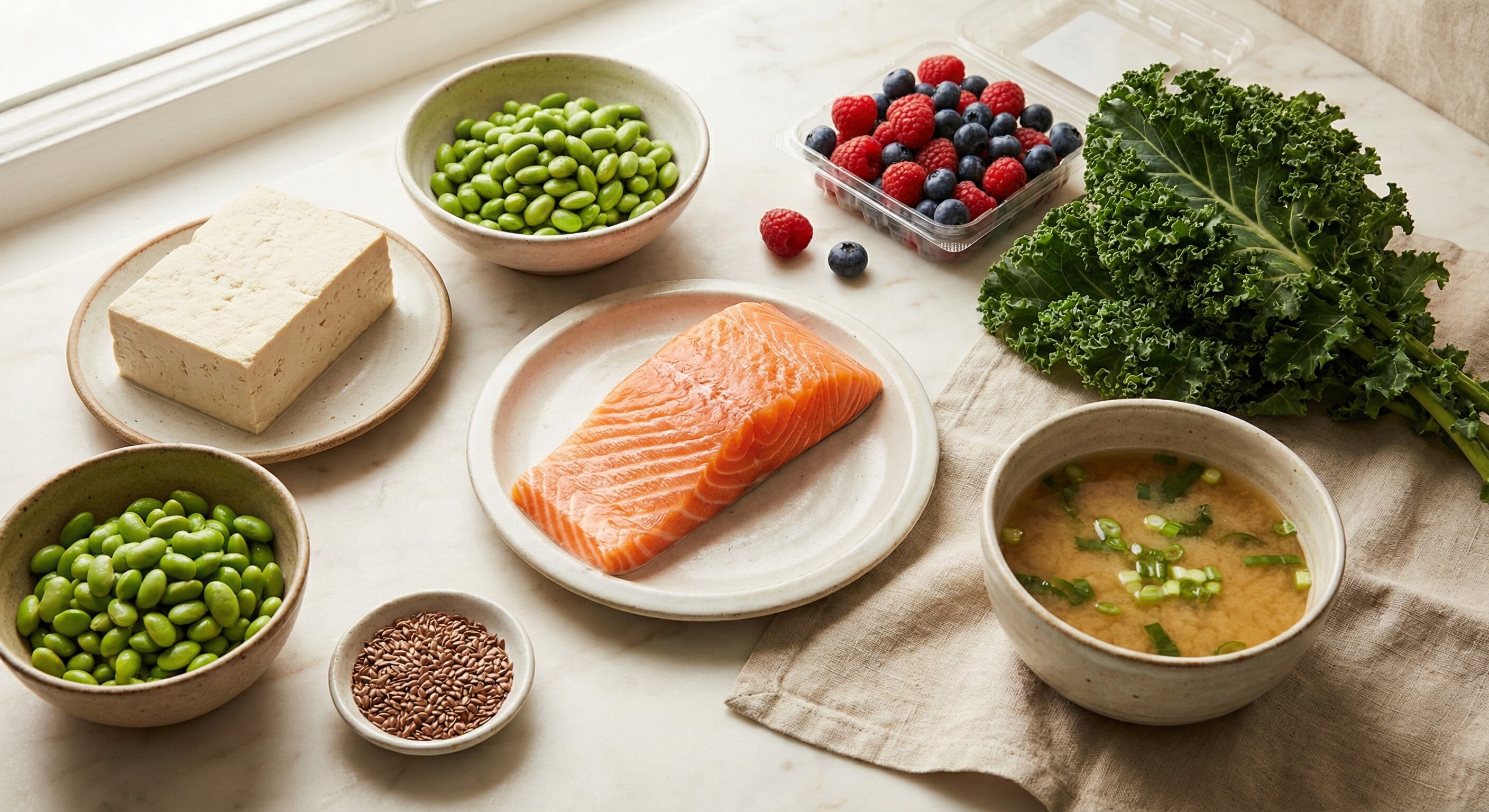
The NIH vitamin C fact sheet explains that vitamin C is needed to make collagen and is available from many fruits and vegetables. You do not need all 18 foods in one day. Use the list as a visual shopping prompt, not a restrictive plan.
| Protein foods | Vitamin C-rich produce | Flexible extras |
|---|---|---|
| Eggs, yoghurt, beans, lentils, tofu, fish | Oranges, kiwi, strawberries, peppers, broccoli, tomatoes | Cabbage, potatoes, leafy greens, berries, peas, squash |
That is 18 food ideas: six protein choices, six produce choices with vitamin C, and six additional vegetables or fruit choices to rotate. The Dietary Guidelines for Americans prioritise whole, nutrient-dense foods and overall eating patterns rather than one “beauty food.”
Turn the list into ordinary meals
Pair a protein food with produce you will actually eat. Beans with peppers and tomatoes, eggs with fruit, yoghurt with berries, fish with broccoli, or tofu with a citrusy salad all fit the same principle. Choose tinned, frozen, fresh, or lower-cost options that work for your budget and routine.
| Meal moment | Simple visual formula |
|---|---|
| Breakfast | Eggs or yoghurt plus fruit |
| Lunch | Beans, lentils, fish, or tofu plus vegetables |
| Dinner | A protein food plus two vegetables or a vegetable and fruit |
| Snack | Fruit, yoghurt, or leftovers that you enjoy |
There is no need to force bone broth, collagen coffee, or expensive powders into the plan. These foods can be enjoyed if you like them, but they do not selectively rebuild collagen in a visible area.
A foundation worth keeping
Pair food habits with a better wind-down
Use the sleep setup checklist for one small evening experiment this week.
The secure signup form will load here.
By subscribing, you agree to receive the requested HealthyFitLine resource and optional email updates through SendFox. You can unsubscribe at any time. See our privacy policy.
We could not load the form here. Open the secure signup form.
Keep skin claims realistic
Food cannot cancel ultraviolet exposure or turn a varied diet into an anti-ageing treatment. The American Academy of Dermatology sunscreen FAQ describes sun protection as important for reducing skin damage from ultraviolet rays. Nutrition is one part of general health, not a cosmetic guarantee.
For a Pinterest-friendly version of this plan, save the three-column list and pick one protein food, one vitamin C-rich produce item, and one flexible extra on your next shop. That creates a practical meal starting point without pretending that a food list is a treatment. Rotate choices through the week so meals stay enjoyable and your routine does not depend on a single expensive ingredient.
Keep the visual plan flexible when eating out, travelling, or using pantry food. A meal can still be useful when it is simple and imperfect.
If you are managing an illness, an eating disorder, a restrictive diet, unexplained weight change, swallowing difficulty, or symptoms you are trying to fix with food alone, seek individual guidance. You do not need a perfect diet to take a useful next step.
Reader questions
What food has the most collagen?
This guide focuses on a varied food pattern rather than a single food. Protein foods and vitamin C-rich produce can both fit that pattern.
Does vitamin C help make collagen?
Vitamin C is needed to make collagen. It is available from many fruits and vegetables, including citrus, berries, peppers, broccoli, and tomatoes.
Can food reverse wrinkles?
No food can guarantee a cosmetic result. Food supports overall nutrition, while sun protection is also important for skin health.
Do I need collagen powder if I eat protein?
No. Collagen powder is optional and does not replace a varied eating pattern.
Are frozen vegetables useful?
Yes. Frozen produce can be a practical and affordable way to include variety in meals.
A useful next read
Collagen Supplements for Skin: What the Evidence Actually Shows offers related guidance.
Sources and further reading
These links explain the evidence and guidance used for this article. Commercial product pages are excluded from this list.
- Vitamin C Fact Sheet for Consumers
NIH Office of Dietary Supplements. Vitamin C is needed to make collagen and is available from many fruits and vegetables.
- Dietary Guidelines for Americans, 2025–2030
U.S. Department of Health and Human Services. The current federal guidance prioritises whole, nutrient-dense foods rather than a single food or supplement.
- Sunscreen FAQs
American Academy of Dermatology. Sun protection can reduce short- and long-term skin damage from ultraviolet rays, making it an important complement to nutrition.